
One Step Back, Three Steps Forward: How Alysa Liu’s Philosophy Can Help College Athletes
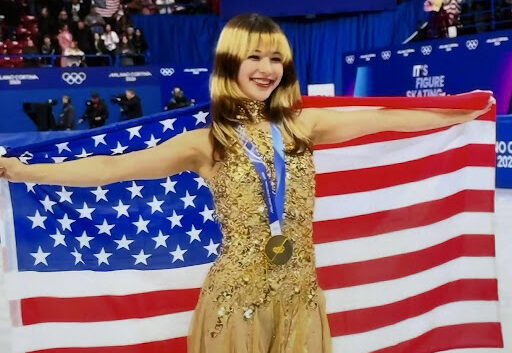
“Winning isn’t all that, and neither is losing. It’s just something that happens.”
Those are the words of 20-year-old Olympian Alysa Liu after capturing the gold in Women’s Individual Figure Skating, becoming the first American to earn the title in 24 years.
Liu’s laissez-faire attitude has made waves online for going against the intense competitive ethos we typically see from the world’s greatest athletes. Figure skating is known for fostering a particularly cutthroat culture amongst its young competitors; Yulia Lipnitskaya was Russia’s golden girl at the 2014 Sochi Games when she was 15, before becoming a cautionary tale of chronic anorexia when she retired because she struggled with the disorder.
At the last Winter Olympics, 15-year-old Kamila Valieva of the Russian Olympic Committee tested positive for a banned heart medication, bringing a large-scale doping scandal to the global stage. The skater who secured the gold medal in those games, Anna Sherbakova, did not celebrate her win with joy, but crumpled to the ice in distress.
When athletes are taught to push through discomfort and expect blood, sweat and tears, Alysa Liu’s relaxed delight is new and refreshing. It is something athletes at all levels can learn from, including Foresters.
The precarious balance that being a college athlete demands, finding time to excel at the responsibilities of your sport and your academics, makes the capacity for burnout and harm to oneself very large. A 2025 Frontiers study found that 90% of NCAA athletes nationwide report feeling overwhelmed and burnt out. 65% consistently display signs of depression or anxiety. What starts as something fun that kids look forward to quickly devolves into a dreaded chore when constant pressure to meet expectations and test physical and mental boundaries is placed.
How did Alysa Liu break this cycle? She stepped away.
After the Beijing Games, which she referred to as a “job,” Liu retired at 16. She enrolled in university and explored hobbies outside of figure skating, including hiking to the Mount Everest base camp and taking up photography. She then came back to the sport she loved on her own terms.
“Taking a step away from the sport allowed me to understand myself because I never had the time before or the space to figure out who I was. So taking a step away allowed me to see the full picture,” she explained to NBC Sports.
Liu is living proof that there is no shame in taking breaks from competitive sports, and that doing so doesn’t irreversibly ruin your athletic capability or decrease the prestige with which you train. There is no set timeline for success. In fact, upon your return, you could find yourself climbing to even more impressive heights than before.
In sports psychology, elite athletes are often said to have two identities, a “self” identity (who they are overall) and an “athlete” identity (who they are as a competitor). Research has shown that the intensity of elite sport makes the athletic identity become a competitor’s Achilles heel. Overattachment to performance and results is draining and can make one feel worthless if a certain goal is not met. Taking a break is often the only way to free your brain and body from this destructive mindset and allow time for recovery and growth.
Finding joy and value in who you are outside of your sport enables you to approach it with the freedom and confidence you did when you first picked it up.
As young adults, we are faced with enough pressures that test our mental sanity–if your sport does not bring you fun and fulfillment right now, there is no point in continuing to push through.
Let this new Olympic philosophy remind you that you are more than a game won or lost, and if you love the person underneath those statistics, you will love your sport even more.