
Make peace with the walk to class: winter layering that works
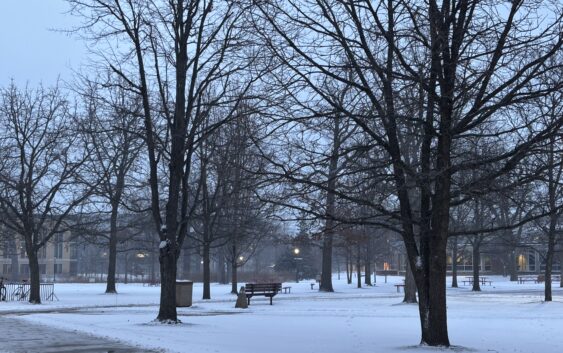
Style must take the backseat when temperatures drop; Knowing how to layer can be the difference between an enjoyable day in a local preserve and a dreadful afternoon study break.
The season of the dreaded winter walk from dorm buildings to middle campus has begun. Stepping out of the comfort of our heated buildings can make rationalizing going to class harder, and getting out from under your covers impossible. But we all have to do it.
Getting outdoors in the winter season can be strenuous, especially in Chicago where the average temperature from December through February is 28.1 degrees Fahrenheit. But, getting outside regardless of the weather has a positive impact on your mental health.
An article published in 2019 in Sage Journals describes the benefits of spending time outside. 12 separate studies discussed within the article determine that spending time outside can improve cognitive function significantly. The cognitive results barely differ in summer vs. winter environments. This means that getting outside, even in winter, can improve your mental health.
Winter temperatures may deter you, but you can fight back the seasonal depression by learning to properly layer your winter clothing.
How to layer
Begin with a tight-to-your-skin shirt. The purpose of this layer is to take moisture away from your body. Moisture staying on your body can prevent your natural processes of temperature regulation from taking place. Wearing a layer that takes moisture away from your body will keep you comfortable, and keep you warmer.
Extreme outdoor athletes, ice climbers, mountaineers, etc. all have to build a layering system that works for them. In a YouTube video for EpicTV Climbing Daily, Adrian Nelhams, a British mountaineer guide, and director of the International School of Mountaineering states, “As soon as you get wet underneath that base layer, then you’re going to get cold.”
Avoid materials that tend to hold onto sweat and perspiration for your first layer. Cotton is not recommended, instead opt for merino wool, synthetic materials, or other technical fabrics.
After your first layer, throw on what’s referred to as a ‘mid-layer.’ The purpose of this layer is to retain heat. Think of it as an insulator: it does not directly interact with the outdoor conditions, but it protects your body’s internal temperature.
The mid-layer can be something as simple as a hoodie. Mid-layers that are made of polyester materials retain less moisture, and in turn can keep you warmer for longer periods. However, down jackets, made with the fluffy soft undercoating of ducks or geese, can be an excellent insulator in less humid environments.
If you expect that you will be outdoors in the winter sweating, you will be warmer wearing a mid-layer that can continue releasing the moisture away from your body.
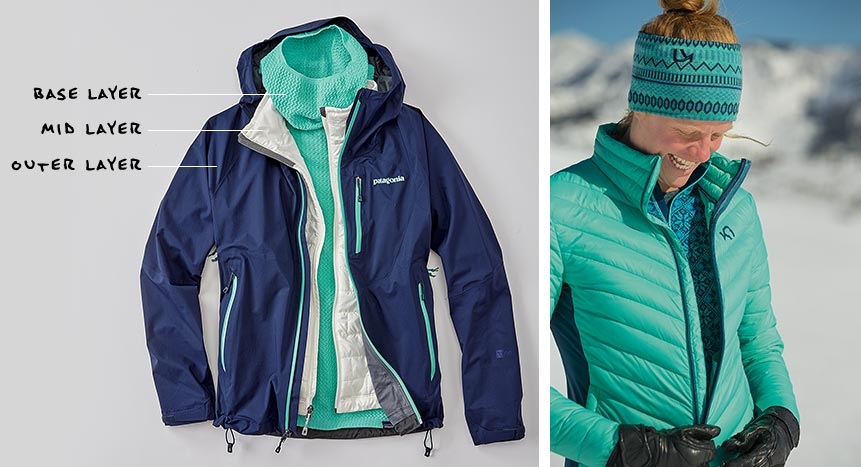
Photo: Title Nine: The Guide to Staying Warm when Temps Get Low
Your final layer may seem like the most important; however, this layer is only effective if you have the proper clothing underneath. Ignoring the mid and base layers can lead to an ineffective body temperature regulation; you get cold fast.
For your outer layers, think of the weather. If it’s precipitating outside (raining or snowing) your layer must be water-resistant or waterproof. The difference between water-resistant and waterproof is that resistant clothing items can withstand less amounts of moisture. Think of an early fall drizzle versus a late January blizzard.
Your outer layer keeps the elements from reaching your skin, which is essential to getting outside in the wintertime. Hard shell jackets that keep moisture from reaching the mid-layer are great for Chicagoland adventures where the weather may take a quick turn into a windy snowfall. Rain jackets, plastic ponchos and other water-repellent fabrics like Gore-Tex work great!
Spending time outside in the winter is hard, but you can make it easier by taking the time to protect your body’s natural functions. Preventing your skin from coming in contact with freezing temperatures – and layering properly will make these next few months more bearable.