
Taylor Swift’s “The Life of a Showgirl”: A Few Gems, At a Cost
Kate O’Donnell ’28
odonnellkgr@lakeforest.edu
Staff Writer
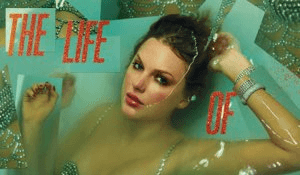
As a lifelong Swiftie, it pains me to admit that, for the first time, I went into Taylor Swift’s Oct. 3 album release with trepidation. “The Life of a Showgirl” didn’t follow the typical Swift-esque rollout. Usually, the months between announcement and release are filled with Easter eggs, lyric reveals, lead singles and interviews that set the tone. The absence of those traditions led to far less anticipation than usual, even among fans.
To glean any insight into Swift’s vision for the album, I had to enter a space I normally wouldn’t touch with a ten-foot pole—a man’s football podcast. The podcast revealed little beyond the idea that the album would be dance-y, with 12 tracks chronicling her life backstage during her previous tour, entitled “The Eras Tour.”
To be blunt, on the first listen, I hated it. Some lyrics are indefensible career lows. The weakest lyrics make the listener cringe and derail otherwise solid songs. The most heartbreaking example is the fifth track, “Eldest Daughter.” Track fives are traditionally the emotional centerpieces of a Swift album, and include some of my favorites in her discography, like “Speak Now’s” “Dear John” and “evermore’s” “tolerate it.”
“Eldest Daughter,” about an older sister finding safety in love after a lifetime of responsibility, had great potential. But throwaway lines like “so we all dressed up as wolves and we looked fire” or “I’m not a bad b****, this isn’t savage” cheapen its substance.
Instead of using imagery or metaphor to deepen the song’s emotional truth, Swift leans on outdated slang. This strategy is visible at other points in the album, like “Did you girlboss too close to the sun?” It makes what could’ve been poignant or witty embarrassing.
“Eldest Daughter” isn’t the only letdown. “CANCELLED!” seems to celebrate a lack of accountability—tone-deaf, even if satirical. “Actually Romantic” could have been a clever frenemy track if it weren’t a clear response to Charli XCX’s “Sympathy is a Knife.” Answering a critique of industry competition between women with a petty diss track feels uncharacteristically small-minded.
Even some love songs, though catchy, lack the emotional texture of “Lover’s” “Daylight” or “reputation’s” “Call It What You Want.” Swift seems to be reaching for a cheeky Sabrina Carpenter vibe, but after years of positioning herself as pop’s poet laureate, the shift doesn’t land smoothly.
Albums like “Red,” “1989,” “Reputation,” “Lover,” and “Midnights” achieved cohesive poppiness without corniness because they were written over longer periods. Taking time allowed Swift to shape a strong vision and add emotional complexity to even her cheeriest pop hits, like “Red’s” “22” or “1989’s” “New Romantics.” You can’t rush art.
Still, there’s plenty to admire. Sonically, the record is refreshing. Reuniting with Max Martin and Shellback was a smart move. Hearing live instruments—bass, drums, piano and clarinet—rather than Jack Antonoff’s synth-heavy production is a relief. The sound is lush and vibrant, and vocally, it’s the freest and most dynamic we’ve heard Swift in years.
“Elizabeth Taylor” is a standout. Dipping into the storytelling well, Swift spins a glamorous, self-aware tale about fame and love, filled with references to the track’s showgirl namesake, like her violet eyes and White Diamonds perfume. Ironically, she notes, “you’re only as hot as your last hit, baby.”
“Father Figure” is the album’s lyrical peak, exploring the mentor-protégé dynamic and flipping it as the student surpasses the teacher—a sharp metaphor for her battles over her masters. “Ruin the Friendship” feels like a return to her Tennessee roots, turning a high school “will-they/won’t-they” into a meditation on grief and regret.
Still, the fact that I only love 25% of a Taylor Swift album is concerning. If you’re a casual listener looking for highlights, try “Elizabeth Taylor,” “Father Figure” and “Ruin the Friendship.” For something upbeat, “The Fate of Ophelia” and “Opalite” are fun. To my fellow Swifties disappointed by this release—you’re not alone. By setting such a high standard for pop storytelling, Swift made it nearly impossible to meet her own benchmark. Here’s to hoping for a lucky 13th after she takes time to reset!