Do modern day performance arts go beyond theatre and filmmaking?
Leonor Valente ‘29
deoliveiraleit@lakeforest.edu
Staff Writer
Since its origin, film has been taking over the performance arts stage. With the technological boom of the two world wars, a shift from Europe to the United States as the central stage for filmmaking and the idolization of actors, American filmmaking has never been more prevalent in the global scope of arts. However, we must not forget that there are 194 more countries in the world, with their own culture and art.
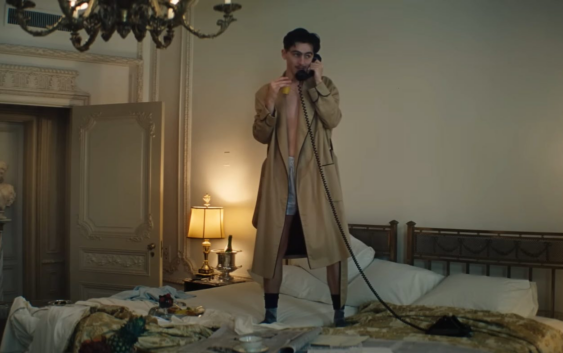
“I don’t want to be working in ballet, or opera, or things where it’s like, ‘Hey, keep this thing alive, even though like no one cares about this anymore.’ All respect to all the ballet and opera people out there […] I just lost 14 cents in viewership. I just took shots for no reason,” were the words said by actor Timothée Chalamet while being interviewed with fellow actor Matthew McConaughey, which have been the talk of the internet and means of communication for the beginning of March.
Some argue that the young actor is not wrong, like Chris Murphy in his article for Vanity Fair, “A Message to the Haters… Timothée Chalamet is Right About Ballet and Opera”; some make more compelling arguments as to why Chalamet’s actions were wrong, but not exactly untrue. So, what do the actor’s words mean to the art world?
Unfortunately, online discourse seems to have lost its ability to prove a point without falling under ad hominem fallacies. Criticism of Chalamet shifted from criticizing his words for what they are, to criticizing him through his work. With the recent release of his film “Marty Supreme,” people have been making fun of the actor for saying that a film about a table tennis player is more important than a ballet or opera piece.
While that is not exactly what the actor said, it does raise a point to the kind of work Chalamet has been involved with. Chalamet is clearly an educated man when it comes to theatre and film (notice he did not criticize the hardships theatre companies go through to stay alive; in the end, theatre is his artistic birth), but he is not a man of the world.
Through a quick analysis of his work, it is easy to see how his narratives have always been very Western-focused. “While he was known as a European indie actor, that image of him has died and he feels more comfortable being himself,” says Lídia Zumbi, a drama and creative writing major at Queen Mary University of London. There is nothing wrong with that when Western audiences are his target. What is wrong is expecting the entirety of humankind to conform to his idea of cinema.
With the U.S. leading in film production and distribution, it can be easy to forget that other parts of the world consume other forms of art. Chalamet’s mistake was generalizing the reality of ballet and opera in the U.S. to the whole world.
“I think it is ruining the nature and humanity of the artistic field by creating a hierarchy of what is important and what ‘truly’ counts as good art when the whole point is self-expression,” Tufts University first-year Karolina Gregoryans said.
While these might be dying industries in the United States, these are still relevant parts of cultural identity for some countries. “Considering the Marty Supreme thing, it is pretty contradicting when he says he doesn’t want to sustain something so old when, by making this movie, he is doing just that,” Gregoryans added.
First-year Lucas Gaspar believes that “it was one of those instances where his mouth was moving faster than his brain; he probably didn’t mean it, or meant it in another way. He ended up insulting a very long-lasting and important part of art history still heavily relevant to certain cultures. His comment was uncultured, and showing no sign of remorse is wrong.”
Following this train of thought, LUISS Guido Carli sophomore Angela Fessia Bejar believes it is a question of ego that led the actor to make such a statement. Zumbi puts emphasis on how, although Chalamet might be correct, his lack of sensitivity and ignorance puts the arts at stake, especially when it is not the first time the actor has made such a comment.
Margarida Simões, an actress and History major at University of Lisbon makes a strong argument when saying “He’s working for a mainstream audience, which makes what he said even more elitist, since he was given the choice to work in this industry, rather than individual productions, or indie movies. As an artist he is betraying his craft when he makes an intentional choice not to fight against the death of certain art forms. No one is asking him to go and dance ballet or sing opera, people are only asking him to support his fellow artists. We can’t forget where his origins lie, and how his struggle to get into Hollywood was never as hard as actors who had to support themselves. He’s an amazing actor but someone who has everything will never be as hungry as someone who has nothing. He has always had what he wanted in life, so he will never fully grasp how it is like to be an artist.”
In the end, should art not be about personal expression within a safe and free space to do it? If that is its motive, why are we highly monetizing it, ranking it and getting into arguments over personal opinions on what is worth or not? Artists have always been controversial, and Chalamet is only one more amongst the group of highly talented artists who take their privilege from granted and expect it to be the reality of everyone else.